Recovery experience can build trust, inspire hope, and strengthen the therapeutic alliance.
It can also test boundaries, activate personal history, and require thoughtful clinical self-awareness.
Lived experience has always been part of the substance use treatment profession. Many CASACs entered the field after rebuilding their own lives through recovery, bringing with them an understanding of substance use that cannot be learned from a textbook alone. That perspective can be one of the profession’s greatest strengths. Research has shown that recovery experience can help foster trust, reduce stigma, and strengthen the therapeutic alliance. At the same time, CASAC lived experience also requires self-awareness, supervision, and strong professional boundaries to ensure that personal history remains an asset rather than a liability.
The Value of Lived Experience
Clients often ask themselves one question before they decide whether to trust a counselor:
“Can this person really understand what I’m going through?”
The answer does not depend solely on whether a counselor has personally experienced substance use. Empathy, clinical skill, and evidence-based practice remain the foundation of effective counseling. However, research suggests that counselors with lived recovery experience can offer an additional level of credibility for some clients. They may communicate hope simply through their presence, demonstrating that long-term recovery is possible.
For many individuals entering treatment, shame and stigma create enormous barriers to engagement. A counselor who models recovery, professionalism, and stability can help reduce those barriers and increase treatment retention.
This does not mean lived experience makes someone a better counselor than someone without it.
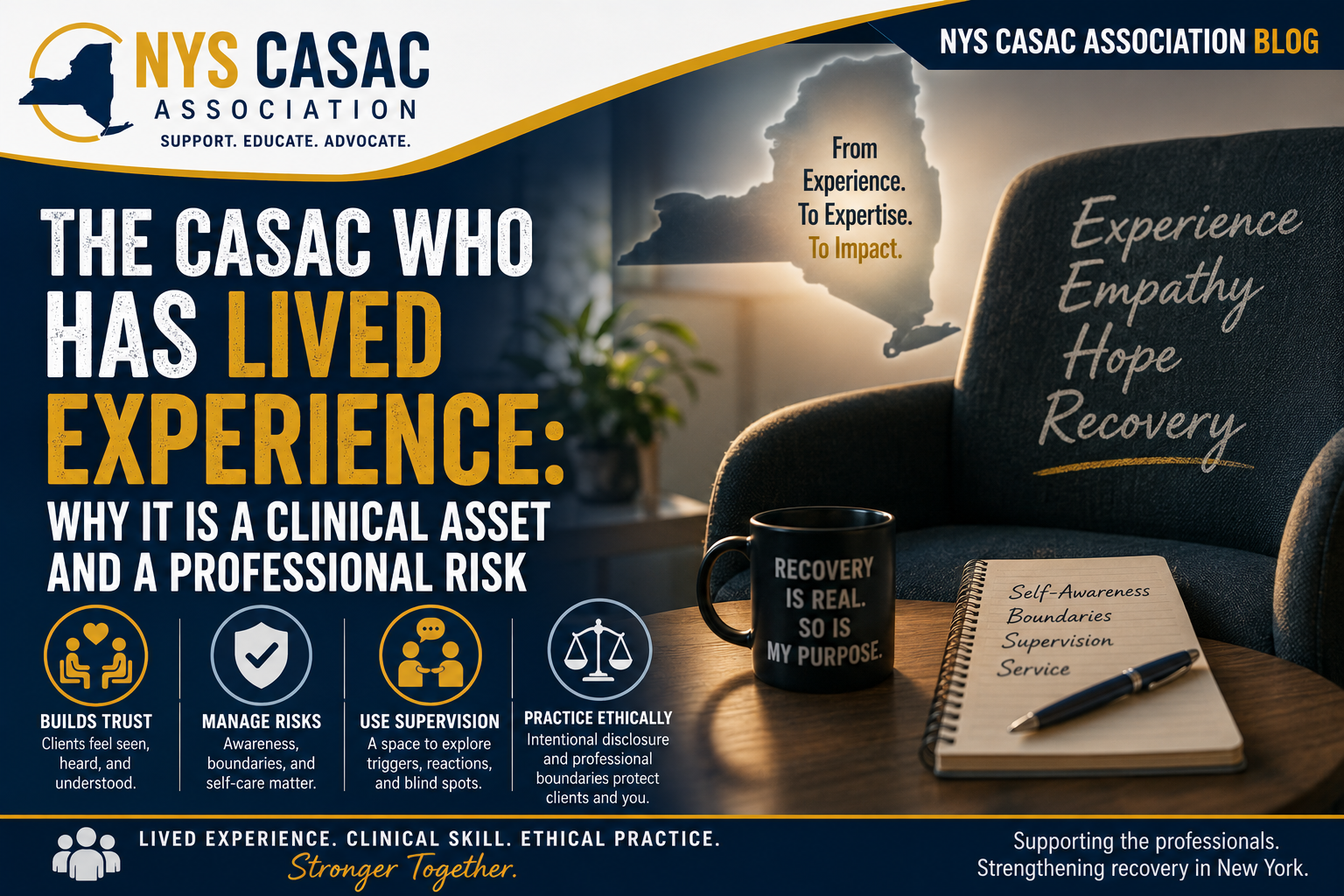
It means CASAC lived experience can become a clinical strength when paired with education, ethical practice, and ongoing professional development.
The Risks That Few People Discuss
The profession often celebrates recovery stories but spends less time discussing the challenges that accompany them.
Working with clients whose experiences resemble your own can activate unresolved emotions, memories, or grief. Hearing details about relapse, overdose, trauma, family conflict, or criminal justice involvement may remind a counselor of their own past.
This is where countertransference becomes important.
Countertransference occurs when a counselor’s personal experiences influence how they respond to a client. It may appear as overidentification, rescuing behaviors, frustration, excessive optimism, or unrealistic expectations.
For example, a counselor who achieved recovery through one pathway may unintentionally expect clients to follow the same route. Another may become overly invested in preventing a relapse because it reminds them of someone they lost—or of themselves.
Recognizing these reactions is not a sign of poor counseling.
Ignoring them can be.
Using Supervision as a Clinical Tool
Good supervision protects both the counselor and the client.
Counselors with lived experience should feel comfortable bringing emotionally activating cases into supervision. Discussing countertransference, personal triggers, and emotional reactions allows supervisors to help distinguish between clinical judgment and personal history.
Supervision is not simply about reviewing documentation or meeting licensing requirements.
It is a space for reflection.
Questions worth asking include:
- Why am I reacting so strongly to this client?
- Am I seeing the client, or am I seeing my own past?
- Am I pushing too hard because I want recovery for them more than they want it themselves?
- What clinical evidence supports my intervention?
These conversations strengthen ethical decision-making and improve client care.
Self-Disclosure: Whose Needs Are Being Met?
One of the most challenging decisions for counselors with lived experience is whether to disclose their own recovery.
Research does not support routine self-disclosure. Instead, disclosure should always be purposeful, clinically relevant, and focused on the client’s needs—not the counselor’s.
Before sharing personal information, consider several questions:
- Will this benefit the client?
- Does it strengthen the therapeutic relationship?
- Is it likely to shift attention away from the client’s goals?
- Am I sharing to help the client or to meet my own emotional needs?
Sometimes the most therapeutic response is silence.
Sometimes a brief, thoughtful disclosure can normalize hope and reduce shame.
The difference lies in intention and clinical judgment.
Recovery Does Not Eliminate Risk
Being in long-term recovery does not make someone immune to stress, burnout, compassion fatigue, or symptom recurrence.
CASACs routinely hear stories involving grief, trauma, overdose, child welfare, homelessness, domestic violence, and loss. Over time, repeated exposure can affect emotional well-being regardless of how many years someone has been in recovery.
That is why every counselor should have an ongoing wellness plan that includes:
- Regular supervision
- Peer consultation
- Healthy boundaries
- Physical self-care
- Time away from work
- Recovery support when appropriate
Protecting your own recovery is not selfish.
It is an ethical responsibility.
A Profession Built on Hope and Evidence
The substance use treatment workforce benefits from counselors with diverse backgrounds. Some bring lived recovery experience. Others bring different personal or professional experiences that allow them to connect deeply with clients.
What matters most is the ability to provide compassionate, evidence-based, person-centered care.
For those with CASAC lived experience, personal recovery should never replace clinical knowledge.
Instead, it should complement it.
Education provides the science.
Ethics provide the framework.
Supervision provides accountability.
Lived experience provides perspective.
Together, these elements prepare counselors to meet clients where they are while maintaining the professionalism that effective treatment requires.
If you would like to strengthen your clinical skills beyond lived experience, Educational Enhancement CASAC Online offers continuing education on neuroscience, trauma-informed care, motivational interviewing, ethics, co-occurring disorders, and other evidence-based practices that support high-quality substance use counseling. Continuing education ensures that personal experience is reinforced by current research and clinical best practices.
The Bottom Line
CASAC lived experience is one of the profession’s greatest strengths when paired with education, supervision, and ethical practice. It can build trust, reduce stigma, and offer hope to individuals beginning recovery. It can also create unique challenges involving countertransference, boundaries, and self-care. By recognizing both the benefits and the responsibilities that come with CASAC lived experience, New York’s counseling workforce can continue providing compassionate, evidence-based care while protecting both clients and themselves.
Sources
- Substance Abuse and Mental Health Services Administration. Recovery and Recovery Support. https://www.samhsa.gov
- White, W. L. (2009). Peer-based addiction recovery support: History, theory, practice, and scientific evaluation. Great Lakes Addiction Technology Transfer Center.
- National Institute on Drug Abuse (NIDA). Principles of Drug Addiction Treatment: A Research-Based Guide. https://nida.nih.gov
Stay Connected With NYS-CASAC Association NEWS
Don’t miss the updates, spotlights, and resources shaping addiction counseling in New York. Join the NYS Association of CASAC Professionals today for full access to announcements, newsletters, and advocacy news that strengthen your voice and career.