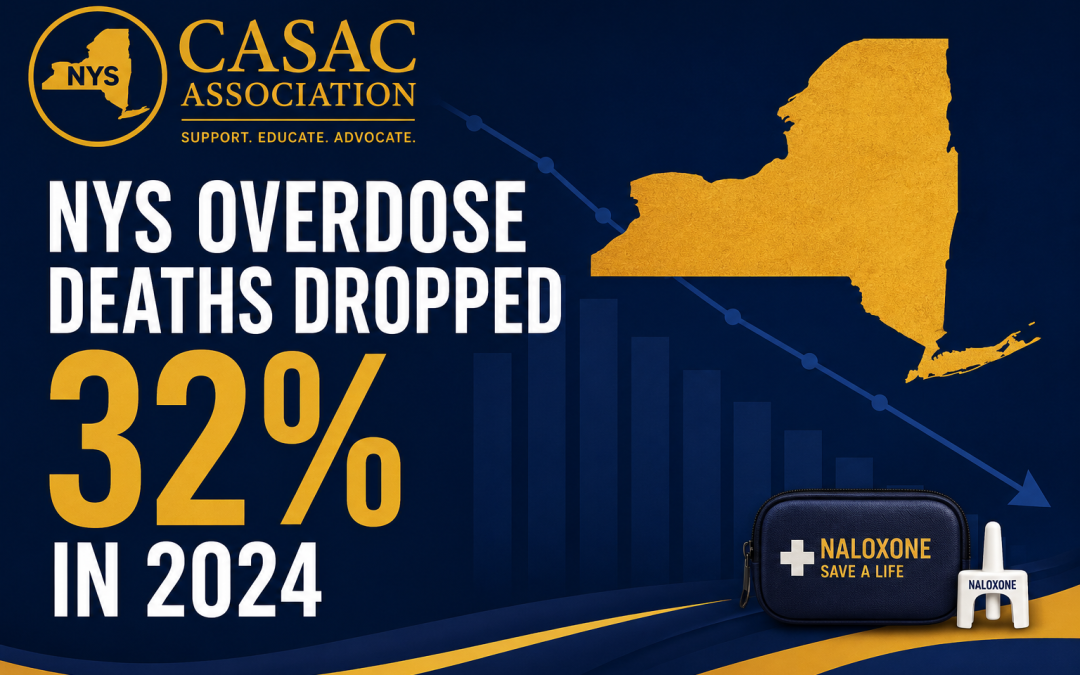
NYS Overdose Deaths Dropped 32% in 2024. Here Is What That Number Does Not Tell You.
The headline is real. The full picture is more complicated. CASACs on the front lines need both.
An estimated 4,567 New Yorkers died of a drug overdose in 2024, down from 6,688 in 2023, according to provisional data from the Centers for Disease Control and Prevention. That is a 32% decline in a single year. For a state that watched overdose deaths climb nearly 300% between 2010 and 2020, that number is significant.
It is also provisional. And it is not the whole story.
As a working CASAC, you deserve the full picture, not because the progress is not real, but because the conditions driving your caseload are more complex than any single headline captures.
What drove the decline
New York’s investment in harm reduction is measurable and specific. Through a first-in-nation online portal, the state distributed more than 296,000 naloxone kits and 13 million fentanyl test strips statewide. OASAS expanded treatment capacity. Governor Hochul’s 2023 Harm Reduction Delivered initiative expanded access to naloxone and education in communities with limited access.
These programs moved the number. That is not speculation. It is documented in the state’s own data and confirmed by public health researchers who called the decline substantial and attributable to specific interventions.
The progress is real. It is also fragile.
What the number does not tell you
Racial disparities in overdose mortality widened in 2024 even as total deaths declined. The overall improvement was not distributed equally across New York communities. Black and Latino New Yorkers continue to die at disproportionate rates, and the gap grew during the same period that the headline number improved.
If your caseload includes clients from communities of color, you already know this on the ground. The data confirms it.
The drug supply also did not simplify. Fentanyl remains present in approximately 77% of NYS overdose deaths. Xylazine, a veterinary sedative with no approved reversal agent, now appears in more than 21% of fentanyl samples statewide, according to Millennium Health’s 2025 Signals Report. Heroin re-emerged in fentanyl-using populations in late 2024 for the first time in years.
Naloxone is still essential. It is no longer sufficient on its own for every overdose presentation.
What is at risk right now
The programs that drove the 2024 decline depend on sustained funding. Federal uncertainty about behavioral health allocations in 2025 threatens the harm-reduction infrastructure New York has built over the past three years. Researchers who praised the decline used the word “tenuous” to describe whether it holds.
OASAS and the NYS Department of Health have $400 million in Opioid Settlement Funds committed to treatment and recovery services. Whether that money reaches the programs and providers doing the work is a policy and advocacy question that directly affects what CASACs can offer clients.
What does this mean in your practice right now?
Update your harm reduction conversations. Clients using opioids need to know about xylazine, what wounds it causes, and why naloxone alone may not be enough. Fentanyl test strips are available through the state portal. If your agency is not actively distributing them, find out why.
Track the equity gaps in your own caseload. If certain clients are not accessing harm reduction or treatment at the same rate as others, that is clinical information worth naming in supervision and in advocacy conversations.
The 32% drop is the best news this field has had in years. It was earned by counselors, harm reduction workers, and clients who stayed alive long enough for help to reach them.
Do not let the headline be the end of the conversation.
Join the NYS Association of CASAC Professionals.
Advance your career. Unify with peers. Advocate for the profession. Gain access to training, certification support, and a statewide network that strengthens both you and the CASAC workforce