Xylazine, Fentanyl, and the New Drug Supply: What Every NYS CASAC Needs to Know
New York’s overdose numbers finally moved in the right direction. Deaths fell 32 percent in 2024, down to an estimated 4,567 from 6,688 the year before. That is real progress. It was earned by counselors, harm reduction workers, and clients who stayed alive long enough for help to reach them. It does not mean the drug supply got simpler. Xylazine and fentanyl now show up together often enough that naloxone alone is no longer the whole answer. Here is what that shift means for your sessions, your agency, and your conversations with clients this week.
What Xylazine Does to the Overdose Response
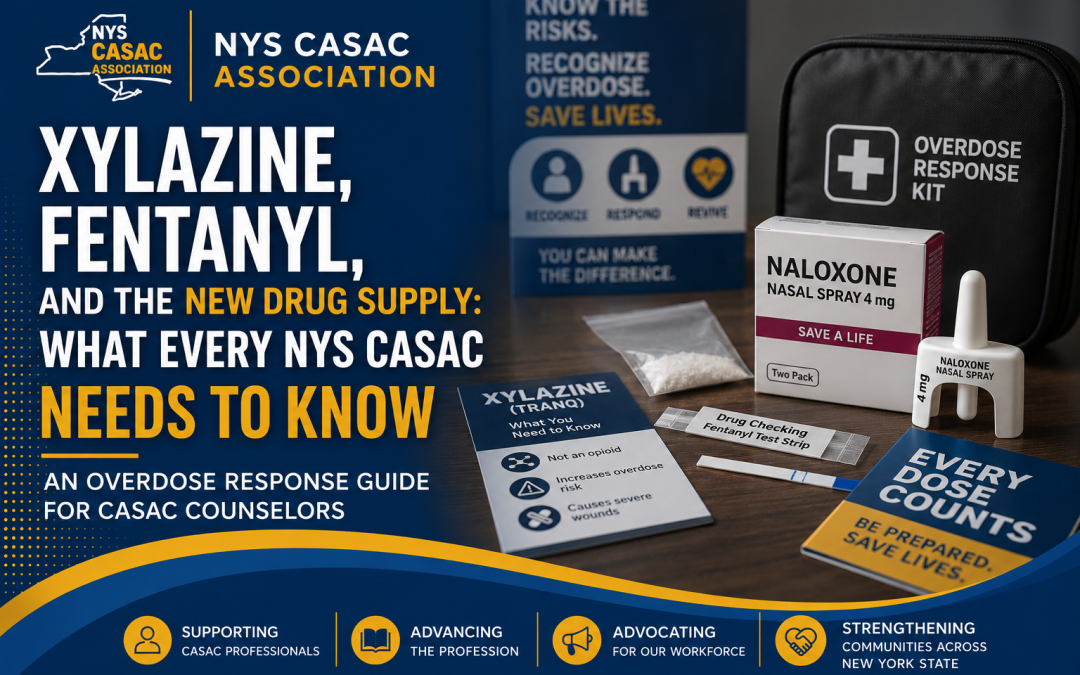
Xylazine is a veterinary sedative. It is not an opioid. Dealers add it to fentanyl to stretch the high and slow the crash. That combination of xylazine and fentanyl changes what an overdose looks like in front of you.
Naloxone reverses opioids. It does nothing on its own, for the sedative effects are layered on top. A person can stay unresponsive after a full dose. New York’s own guidance on the drug is direct about this limit. Xylazine does not respond to naloxone. The state’s overdose guidance calls instead for rescue breathing, which keeps a person breathing until EMS takes over.
Xylazine carries a second risk that naloxone was never built to touch. It restricts blood flow to the skin, and repeated use can cause deep, slow-healing wounds, often far from the injection site. Clients may need wound care just as urgently as they need an overdose plan.
The response sequence now looks like this:
- Call 911 first, every time
- Give naloxone, wait two minutes
- Repeat naloxone once if no response
- Start rescue breathing if still unresponsive
- Stay with the person until EMS arrives
Knowing this sequence by heart is now a baseline clinical skill, not an extra.
What the Current Supply Actually Looks Like
The numbers behind that shift are sharper than most training caught up to. Nationally, more than 21 percent of people testing positive for fentanyl also tested positive for xylazine in 2024. That is a steep jump from the year before, according to one of the country’s largest drug-testing labs. That combination of xylazine and fentanyl is no longer the exception in a urine screen. It is close to routine.
New York’s own Community Drug Checking Program found xylazine in 40 percent of opioid samples by October 2025. Back in May of that same year, the figure was just 4 percent. The climb happened inside a single year. Opioids, mostly fentanyl, were still involved in about 77 percent of New York’s overdose deaths in 2024, so the substance has not gone anywhere. It has just picked up new company.
The same national lab data shows heroin reappearing among people using fentanyl. The trend is strongest across the western half of the country, where heroin had nearly vanished during the worst years of the fentanyl crisis. Counselors in New York should expect the pattern to travel east.
Staying ahead of numbers that move this fast is not optional. NAADAC’s code of ethics names competence as a core obligation, the responsibility to remain current with treatment modalities, theories, and techniques as the field itself keeps changing.
What has shifted since most CASAC training was written:
- Xylazine: common now, not rare
- Heroin: back in some regions
- Fentanyl: still the dominant opioid
- Polysubstance use: the norm, not the exception
None of this is the supply CASACs trained on five years ago.
Test Strips, Naloxone, and the Portal Behind the Numbers
OASAS built the first state-run online portal in the country for ordering naloxone and test strips free of charge. Any agency and many individuals can request a kit without a prescription or an office visit.
More than 13.2 million fentanyl test strips have moved through that portal. So, we have 10 million xylazine test strips and 296,000 naloxone kits. Demand for xylazine and fentanyl test strips climbed together, which tracks with how quickly the two started showing up side by side in the supply.
Federal guidance on overdose reversal medications now covers naloxone and nalmefene side by side. That pairing reflects how fast the response toolkit keeps expanding behind the test strip data. Nalmefene stays active in the body longer than naloxone, which matters more now that the supply contains substances naloxone cannot touch at all.
Where access usually breaks down:
- Nobody reorders before the supply runs low
- Staff train on naloxone but skip rescue breathing
- Xylazine strips sit unstocked next to fentanyl strips
- Clients never hear the portal exists
Access is no longer the barrier most agencies think it is.
Updating the Harm Reduction Conversation in Your Agency
Clients deserve an accurate picture of what they are using, not last year’s version of it. Tell them plainly that fentanyl rarely shows up alone anymore. Tell them xylazine causes wounds that naloxone cannot touch. Tell them rescue breathing matters as much as the shot itself, and that nobody should walk away from an overdose training without knowing both steps.
The bigger picture matters here too. New York’s 32 percent drop in overdose deaths came with real caveats about what it does and does not mean for a caseload like yours. The gains are real. The equity gaps inside them are real too, and the progress is more fragile than the headline number suggests.
Does your agency’s harm reduction conversation still start and end with handing over a naloxone kit? A fuller walkthrough of harm reduction strategies built for drug counselors is worth revisiting alongside this one. The mix of xylazine and fentanyl clients are using now calls for a wider conversation than one kit can cover.
Five updates worth making this week:
- Name xylazine and wound care directly
- Walk through rescue breathing step by step
- Mention polysubstance use without judgment
- Bring portal access into intake conversations
- Ask what clients have actually heard already
Five extra minutes in a session beat a gap in a client’s knowledge.
Knowing the Supply You’re Actually Treating
None of this requires a new credential or a new framework. The mix of xylazine and fentanyl will keep shifting, and the next change in the supply will not wait for a training calendar.
What it asks for is smaller and more immediate. Update what you tell clients this week. Stock what the portal already offers for free. Treat rescue breathing as seriously as naloxone, every single time. Bring one number from this post into your next team meeting. Ask whether your agency’s harm reduction conversation has caught up to the supply your clients are actually using.
Stay Connected With NYS-CASAC Association NEWS
Don’t miss the updates, spotlights, and resources shaping addiction counseling in New York. Join the NYS Association of CASAC Professionals today for full access to announcements, newsletters, and advocacy news that strengthen your voice and career.